




Agency Website Design — What to Look For (and How Bespire Delivers)
Search “agency website design” and you'll find endless galleries — award-winning sites, Dribbble shots, and template marketplaces.
But what you really want to know is: what makes a website actually good, what does it cost, and how can you get that quality for your own brand?
Great agency website design isn't about having the flashiest animations. It's about having a site that makes your brand clear, loads quickly, and gets the right people to take action.
This guide breaks down what separates a great website from an average one — and the different ways to get there.
What "Agency Website Design" Actually Means
Agency website design is about more than making a website look polished. It's about making every part of the site feel intentional.
The messaging tells people what you do and why it matters. The design makes that message easy to follow. The visuals build credibility. And the experience makes it simple for visitors to find what they need and take the next step.
That's what gives a website that agency-level feel: strong thinking behind the design, not just a polished surface.
You don't need the flashiest website or the most complicated animations. You need a site that looks considered, feels credible, and works for the business behind it.
What Separates Great Agency Website Design From Average
A good website looks good. A great one makes everything feel intentional.
The difference shows up in the details: how quickly people understand your brand, how naturally they move through the site, and how well everything works once they start using it.
A clear story, not just a pretty layout
A great website knows what it wants you to understand first.
The headline makes the value clear. The sections build on that message. The visuals support the story instead of competing with it.
Because a beautiful website that makes you wonder “Wait, what do they actually do?” isn't doing its job.
Motion and interaction with a purpose
Motion should feel like part of the design, not something added on top of it. The best interactions guide attention, reveal information, and add personality to the brand.
Used well, animation can make a website feel more engaging and help people move through the page naturally. Every interaction should support the experience and make the content easier to follow.
Performance and responsiveness under the polish
A website can look incredible and still lose people if it's slow, awkward on mobile, or difficult to navigate.
Great agency-level design considers the whole experience, not just the desktop version. It should feel fast, work well across devices, and make it easy for people to get where they need to go.
Agency Website Design Examples Worth Learning From
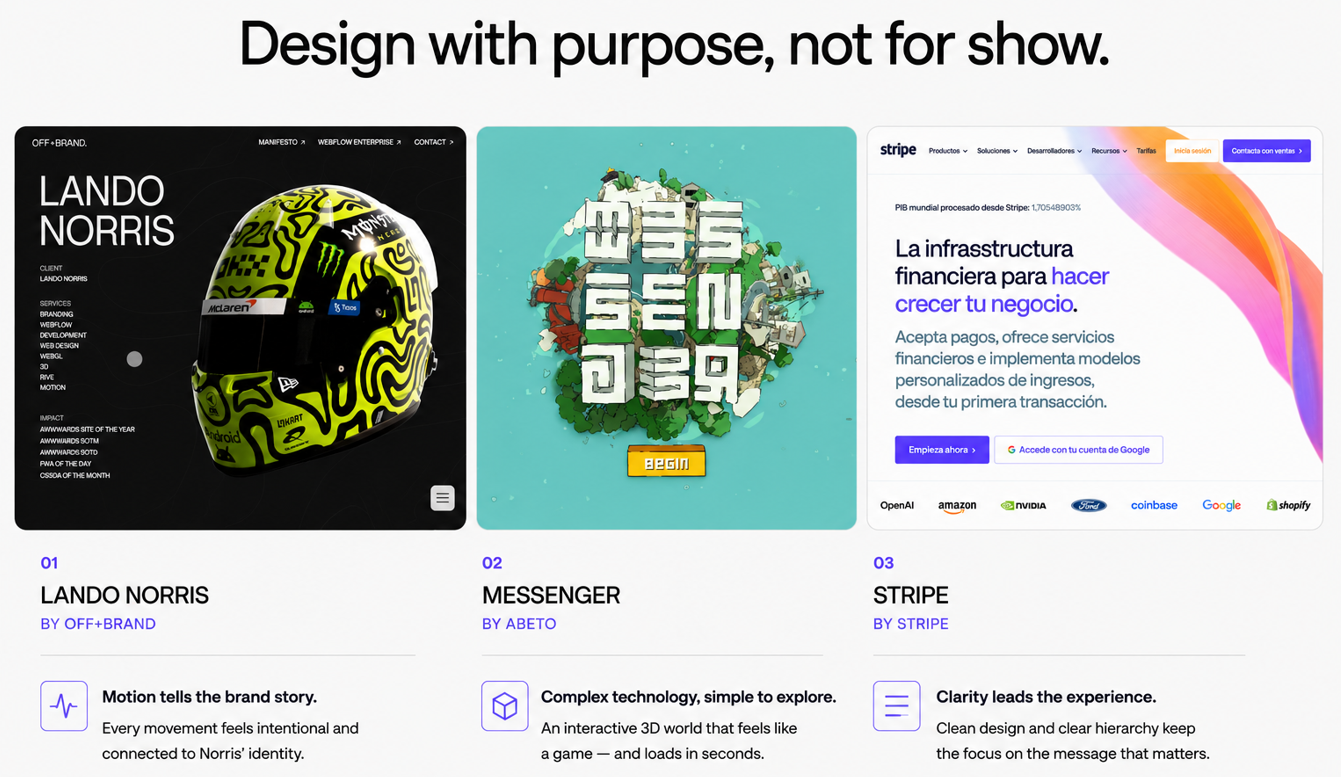
You don't need to copy award winners to learn from them. Study the sites that stop you and ask why. Usually it's restraint — generous whitespace, a tight type system, one or two confident ideas instead of ten competing ones. Look at how the best creative agency websites introduce their work: they lead with outcomes and let the visuals support the story, rather than dumping a portfolio grid on the homepage. The lesson to steal isn't a specific layout; it's the discipline behind it.
What to Look For When You Evaluate Agency Website Design
A great-looking website isn't automatically a great website. Before choosing a designer or agency, look at how the work actually performs.
Ask yourself:
☐ Clear purpose — Does every page have a job?
☐ Easy to navigate — Can users find what they need?
☐ Mobile-ready — Does it work as well on a phone?
☐ Fast to load — Does the experience stay smooth?
☐ Consistent branding — Does the design feel like one brand?
Good design should look right, feel easy to use, and work for the business behind it.
How Much Does Agency Website Design Cost?
This is the question most inspiration galleries never answer.
There isn't one standard price. The cost depends on what you're building — the number of pages, level of customization, functionality, content, and strategy involved.
Current industry data shows how wide the range can be. Clutch reports that most web design projects cost less than $10,000, while its average project is around $38,105.
Freelancers can be a more affordable option for focused projects, while agencies typically cost more because you're paying for a broader team and range of capabilities.
Subscription models take a different approach, replacing a large upfront project cost with a predictable monthly fee. This can make more sense for brands that need ongoing web design, updates, landing pages, and other creative work beyond the initial launch.
The right question isn't just “How much does a website cost?” It's “How much website work will we actually need?”
How to Get Agency-Caliber Web Design: Agency, Freelancer, or Subscription
There are three common ways to get agency-caliber web design. The right choice depends on how much work you need and how often you need it.
· A traditional agency makes sense for a major website project where you want strategy, a dedicated team, and a longer timeline.
· A freelancer can be a good fit for a smaller, one-off project with a tighter budget — especially when you already know what you need.
· A design subscription or Creative-as-a-Service partner, like Bespire, makes more sense when creative needs don't stop after launch. You might need a website today, a landing page next month, and new pages or updates after that — without starting a new project every time.
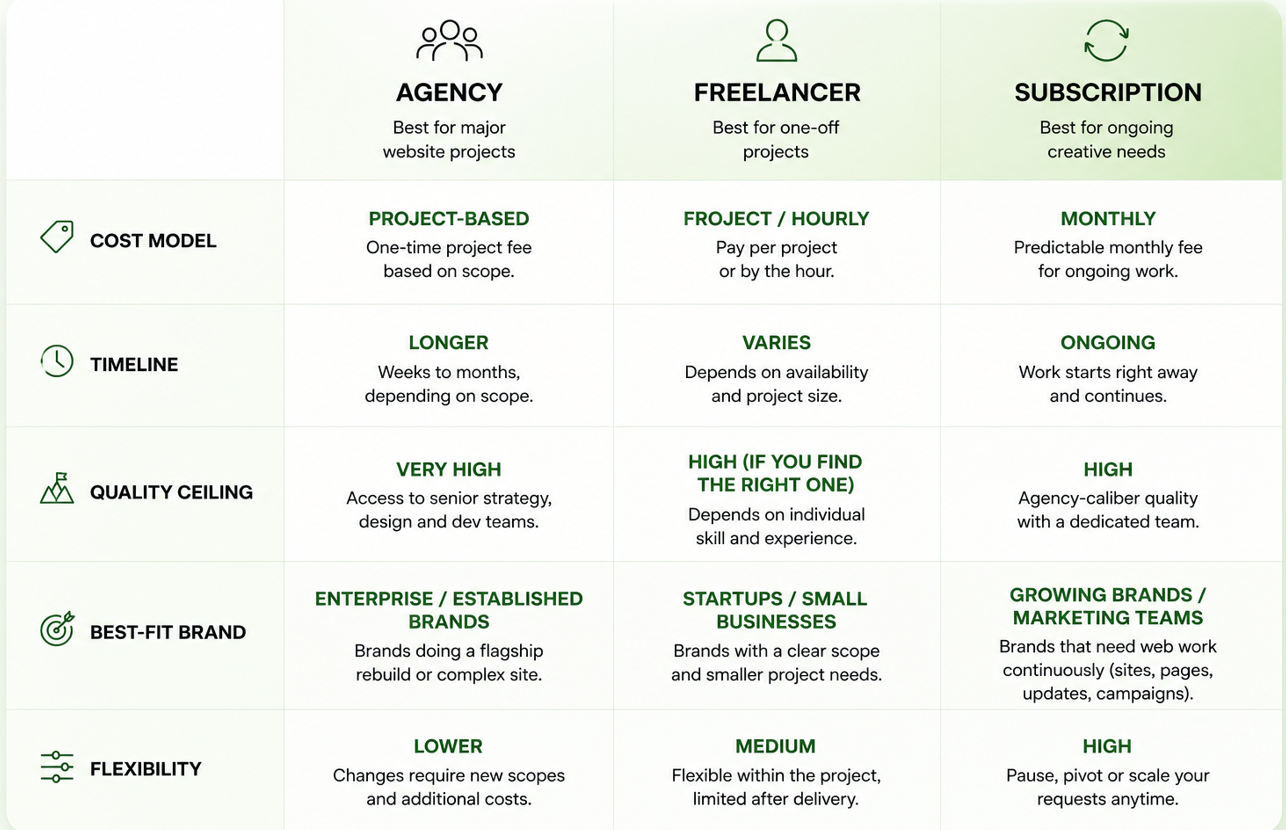
For a growing brand producing web work continuously, that third route often delivers the quality of the first without the commitment of a full agency engagement.
Common Mistakes That Make an Agency Website Look Cheap
Some things can make even a well-designed website feel unfinished.
Too many fonts.
Different typefaces can quickly make a site feel inconsistent.
Inconsistent spacing.
When every section has different spacing, the whole site starts to feel messy.
Generic visuals.
Stock images are fine when they fit the brand. The problem is when they look like they could belong to anyone.
Copy that comes second.
Great design can't fix messaging that isn't clear or useful.
Designing for looks instead of people.
A homepage can look impressive and still make visitors work too hard to find what they need.
Good agency-level design isn't about adding more. It's about making the right things work together.
Frequently Asked Questions
How much does an agency website cost?
There’s no fixed price. A simple website can cost a few thousand dollars, while a custom site with more pages, strategy, and development can reach tens of thousands. For brands with ongoing creative needs, a Creative-as-a-Service model can offer a different way to approach that investment — with a predictable monthly cost instead of a large one-time project.
What's the best website builder for agencies?
Webflow is the most common choice for agency-caliber sites because it balances design freedom with clean, maintainable output; WordPress and Framer are popular too. The builder matters less than the person using it — a great designer makes any capable platform look premium.
How do you create an agency website?
Start with strategy: who it's for, what it must achieve, and the one idea it should communicate. Then structure the content, design around the messaging hierarchy, build on a capable platform, and test relentlessly on real devices. Skipping the strategy step is why most sites look nice but convert poorly.
How long does agency website design take?
It depends on the scope. A traditional agency build can take two to four months, while smaller projects can move faster. With a subscription model, work can happen in stages, so you can launch what you need and keep improving the site over time.
Should you use a template or a custom design?
A template is fine for a simple site on a budget, but it caps how distinct you can look — and distinctiveness is much of what agency website design is buying. If your brand needs to stand apart, custom or heavily customized work is worth the difference.