




The Complete Guide to Luxury Real Estate Branding
Luxury real estate branding is the process of building a distinct market identity—visual, verbal, and experiential—around the properties you represent and the people behind them. In the luxury market, buyers aren't simply investing in square footage; they're investing in lifestyle, status, and a brand they trust. That's why every touchpoint, from your visual identity to your client experience, plays a role in shaping perception.
Get it right, and a boutique brokerage with a handful of listings can compete with firms many times its size. Get it wrong, and even a $20 million property can feel like just another listing. Without a clear strategy behind the brand, polished marketing alone isn't enough to turn attention into trust or trust into sales.
What Is Luxury Real Estate Branding?
At its core, luxury real estate branding is the process of creating a consistent, premium experience across every client touchpoint. It goes far beyond a logo or a carefully designed website. It's reflected in your photography, your marketing materials, your communication style, your property presentations, and the level of service clients receive throughout the buying or selling journey.
Every interaction shapes how buyers perceive your business before they ever step inside a property. For affluent clients, those details matter because they signal professionalism, discretion, and attention to quality. When every element feels intentional, your brand establishes immediate psychological comfort and trust, making you the definitive choice in a fiercely competitive market
What Makes a Real Estate Brand Feel “Luxury”?
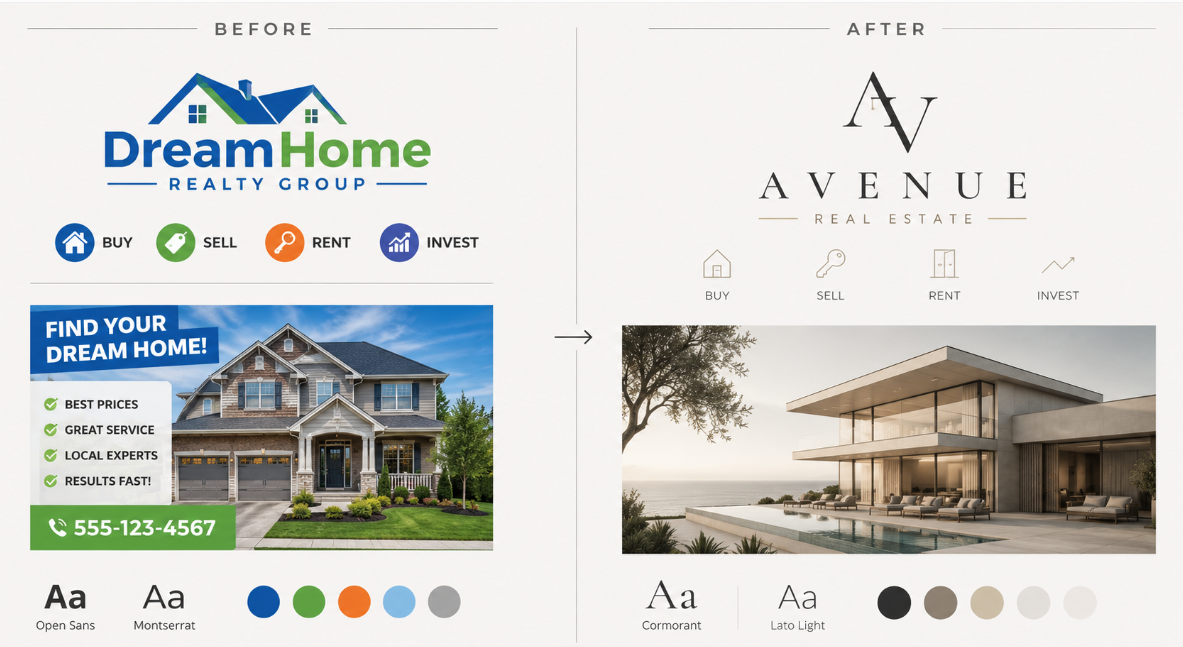
Luxury isn't defined by price alone. It's reflected in the design choices and client experience that shape a brand. Luxury real estate brands typically use clean layouts, refined color palettes, and messaging that feels confident rather than overly promotional. Their communication is clear, thoughtful, and never tries too hard to impress.
Compare a handful of real estate branding examples side by side, and you'll notice a common pattern: the higher the price point, the more understated the branding tends to be. Instead of relying on bold claims, these brands let quality, attention to detail, and consistency build trust.
The Core Elements of a Luxury Real Estate Brand
Three elements do most of the work, and skipping any one of them is usually why a rebrand doesn’t move the needle.
Visual Identity
This is logo, color palette, typography, and photography style — but the real differentiator is restraint. Luxury brands tend to run one or two accent colors against a neutral base, commission architectural photography rather than stock imagery, and resist the urge to add a tagline to every asset. It's no surprise that 98% of successful real estate professionals invest in professional property photography, making high-quality visuals a defining standard in the luxury market.
Voice & Messaging
Luxury copy reads like it was written for one person, not a mailing list. Drop the exclamation points, the “won’t last long,” and the countdown-timer urgency that works for starter homes — affluent buyers respond to confidence and specificity, not pressure. A listing description that names the millwork joinery detail beats one that calls the kitchen “stunning.”
Client Experience
Branding doesn't end with your visual identity—it extends to every interaction a client has with your business. From the first inquiry and the speed of scheduling a private showing to the quality of communication and even the closing gift, every detail shapes how your brand is remembered.
"In high-end real estate, the relationship with the agent takes on heightened psychological importance. These buyers are accustomed to working with trusted advisors and expect the same expertise and discretion from their real estate professional." — Anthony DiCicco
How to Build a Luxury Real Estate Brand: A Step-by-Step Framework
Most agents skip straight to the logo. The brands that actually hold up start three steps earlier.
Step 1: Define Your Ideal Affluent Buyer
Ultra-high-net-worth buyers, second-home downsizers, and international investors don’t respond to the same signals, a brand built for one will feel off to the others. Before any design work starts, get specific about who you’re targeting, including whether you’re courting individual buyers or partnering with luxury real estate development companies on new inventory, and what that buyer already owns, reads, and drives. That specificity is what separates a brand from a mood board.
Step 2: Craft a Distinctive Brand Story
Every luxury brokerage promises "exceptional service" and "exclusive access," making those claims easy to overlook. Instead, focus on what genuinely sets your brand apart, whether it's years of specializing in waterfront estates, a background in architecture, or deep expertise in a specific luxury market.
A clear, authentic story gives buyers a reason to remember your brand and trust your expertise.
Step 3: Invest in a Premium Visual & Digital Identity
This is where real estate branding design earns its cost — a logo system, a color and type palette, and a website built to load fast and photograph well on a phone, since that’s where most first impressions now happen.
|
Performance Metric |
Custom Website |
Template Website |
|---|---|---|
|
Average Load Time |
0.8–1.4 sec Fast, seamless browsing |
3.2–5.8 sec Slower loading experience |
|
Google PageSpeed Score |
90–100 Optimized performance |
50–70 Average performance |
|
Typical Bounce Rate |
31–35% Visitors are more likely to stay |
45–49% Higher chance of users leaving |
Even a well-designed luxury website can lose potential buyers if it loads slowly. A custom-built website reinforces a premium brand experience from the very first interaction, while slow load times can undermine trust and engagement.
Step 4: Lead with Content & Thought Leadership
Publish the kind of market analysis a buyer can’t get from Zillow — neighborhood-level price trend breakdowns, off-market inventory notes, renovation ROI specific to historic properties. This is also where a real estate branding agency earns its retainer: consistent, credible content compounds in a way that occasional listing ads never do.
Step 5: Deliver a White-Glove Client Experience
Brand consistency has to survive the handoff from marketing to operations — the private showing that starts on time, the closing binder that arrives bound rather than emailed as a PDF, the follow-up call three months later. These are cheap to execute and expensive to fake, which is exactly why they work as differentiation.
Common Luxury Real Estate Branding Mistakes to Avoid
Some of the most common branding mistakes include:
-
Building visuals before defining your strategy. A polished logo, premium color palette, or elegant website won't make an impact if your brand isn't built around a clear buyer profile and positioning.
-
Copying a competitor's aesthetic. Adopting the same neutral colors, serif fonts, and polished imagery without a clear strategy only makes your brand blend in rather than stand out.
-
Being inconsistent across touchpoints. A beautifully designed website paired with generic email templates, outdated marketing materials, or inconsistent messaging can quickly weaken a premium image.
-
Overlooking the digital experience. Slow-loading websites, poor-quality photography, or outdated visuals can quickly undermine trust. Luxury buyers expect a seamless online experience from their very first interaction.
-
Treating branding as a one-time project. Every new listing, marketing asset, vendor, and client interaction should reinforce the same level of quality. As more luxury agents shift their focus from mass advertising to referral networks and their sphere of influence, maintaining a consistent brand experience becomes even more important.
Avoiding these mistakes it's about delivering the same level of quality, trust, and attention to detail every time someone interacts with your business, because that's what truly defines a luxury brand.
How Bespire Helps Luxury Real Estate Brands Stand Out
Building a luxury real estate brand requires more than great design. It takes consistency across every client touchpoint. That's where Bespire helps.
We work with luxury real estate brands, brokerages, and developers to create cohesive brand experiences that reflect the value of what they sell. From visual identity and websites to listing presentations, marketing collateral, and digital content, every asset is designed to strengthen your positioning and build trust with affluent buyers.
Whether you're launching a new development, repositioning your brokerage, or growing your personal brand, Bespire helps you create a brand that's memorable, consistent, and built to support long-term growth.
Frequently Asked Questions (FAQ's)
How do I build a luxury real estate brand?
Start with your buyer, not your logo. Define who you're targeting, build a visual identity and brand message around their expectations, and make sure every client interaction, from the first inquiry to the closing experience, reflects the same premium standard.
What are the 5 C’s of branding?
The 5 C's, Company, Customers, Competitors, Collaborators, and Climate, are a strategic framework used to evaluate your brand's position before developing its visual identity. They help ensure your branding is driven by market insights rather than design trends.
What is the 3-3-3 rule in real estate?
The 3-3-3 rule is a follow-up strategy that recommends contacting a lead within 3 minutes, following up again after 3 hours, and making a final touchpoint within 3 days. In the luxury market, timely and personalized communication helps build trust from the very first interaction.
What are the 8 P’s of luxury?
The 8 P’s, product, price, place, promotion, people, positioning, packaging, and perception, extend the standard marketing mix for goods where perceived exclusivity, not just utility, drives the purchase decision, and they map directly onto how a luxury real estate brand should think about every listing.