




What Does a Graphic Designer Do? A Premium Brand's Complete Guide
A premium brand lives or dies on the details — the weight of a logo, the paper stock on a box, the spacing on a menu. A graphic designer is the person who controls those details on purpose. Ask what a graphic designer does and most answers stop at "makes things look nice." For a premium brand, that misses the point entirely. The right designer isn't decorating your brand; they're protecting the perception that lets you charge what you charge.
What Is a Graphic Designer?
At its simplest, a graphic designer communicates ideas visually through type, imagery, color, and layout. The Bureau of Labor Statistics describes the role as creating visual concepts to inform and captivate an audience. That’s accurate, but good design goes beyond simply getting information across.
It can set a tone, create a feeling, and shape what people expect from a brand. For a premium brand, that difference matters. The design isn't just part of the message, it's part of the experience.
What a Graphic Designer Actually Does Day to Day
The job is less about sudden inspiration and more about disciplined problem-solving. A designer takes a brief — a new product, a packaging refresh, an event invitation — and works through concept, layout, typography, and revision until the piece does its job. They also build and maintain the visual systems that keep a brand coherent: the logo lockups, the color palettes, the templates your team reuses.
On any given week, that might mean packaging one day, a social campaign the next, and a pitch deck after that. The formats change, but the goal stays the same: making sure every piece feels like it belongs to the same brand.
Why Graphic Design Matters More for Premium Brands
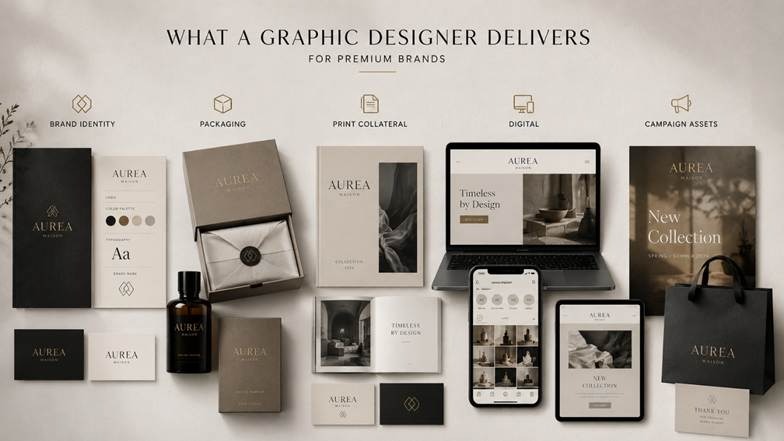
Mass brands can absorb a mediocre layout; premium brands cannot. When customers pay more, they're partly paying for how the brand makes them feel; and design is the first and most constant signal of that feeling. A misaligned logo or a cheap-looking label doesn't just look off. It quietly contradicts the price on the tag.
Great graphic design does the opposite. It makes the product feel worth more before a word of copy is read, and it creates the consistency that turns a first impression into recognition, and recognition into trust.
Robert Brunner, founder of Ammunition and former designer at Apple, has argued that every interaction with a brand contributes to the overall brand experience. In that sense, design isn't separate from the brand — it helps define it.
That’s why, for a premium brand, design is part of how the brand communicates its value — across every detail, every touchpoint, and every interaction.
The Types of Graphic Design a Premium Brand Needs
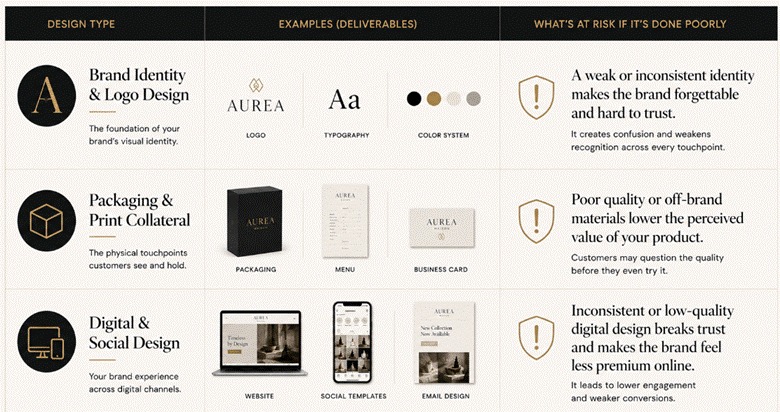
There are many types of graphic design, but premium brands tend to rely on a few more than others. These are the areas where design has the biggest impact on how the brand is experienced.
Brand identity and logo design
This is the foundation. A logo or brand designer builds the core visual identity — the logo, typography, color system, and other elements that shape how the brand looks and feels.
Restraint often works better than adding more. The strongest luxury identities tend to be distinctive without being loud, giving the brand room to feel confident and considered.
Packaging and print collateral
For many brands, the physical experience matters just as much as the product itself.
Packaging, menus, lookbooks, and other printed materials are things customers can actually see and touch. That makes small details especially noticeable. Poor materials or inconsistent design can quickly make a product feel less considered.
And it can affect purchase decisions: a national survey by the Paper and Packaging Board found that 72% of U.S. consumers say packaging design can influence what they buy, while 63% say paper and cardboard packaging can make a product feel more premium or high quality.
Digital and social design
The same standards have to survive the jump to screens. Social templates, email, the website, ad creative — all of it must feel like the same brand as the box in someone's hands.
What Separates a Premium Graphic Designer From a Commodity One
The difference isn't just about how polished the final piece looks. It's about how the designer thinks before they start designing.
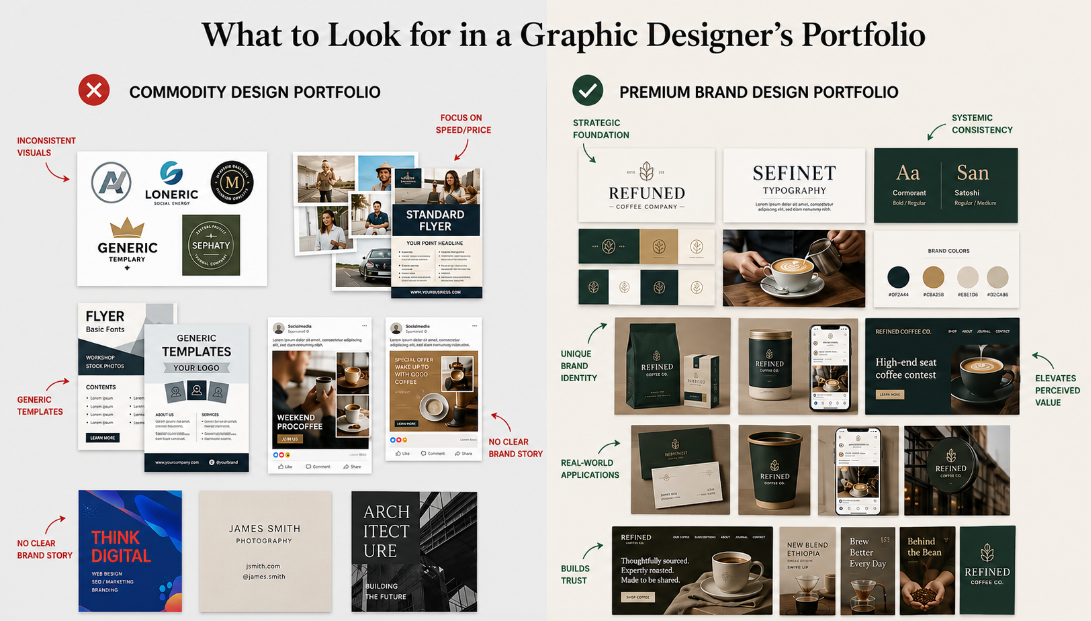
Low-cost design services often compete on speed and price. A premium designer brings something different: a clear understanding of the brand, the audience, and what each piece needs to accomplish.
Two things stand out.
Strategy Before Decoration
A commodity designer might ask, “What do you want it to look like?” while a stronger designer starts with a different set of questions: What is this piece supposed to do? Who is it for? What should it make them feel? And how does it fit into the wider brand?
The visual choices come from those answers. The goal isn't just to make something look good, but to make sure it works for the brand.
Consistency Across Every Touchpoint
Anyone can make one beautiful asset. The harder part is making the hundredth one feel like it belongs with the first.
A strong designer understands that consistency doesn't mean making everything look identical. It means carrying the same visual language across packaging, social, digital, print, and campaigns, so the brand feels recognizable wherever people encounter it.
Stanford's Web Credibility research found that people often use visual design, including layout, typography, and color — when judging whether a website is credible.
That's one of the clearest things to look for when evaluating a designer's portfolio: not just whether they can create something beautiful, but whether they can create a visual system that builds trust and lasts.
Graphic Designer, Brand Designer, or Agency: Which Does a Premium Brand Need?
The titles can overlap, but the right choice usually comes down to what you need.
-
A graphic designer works across formats and is a good fit for ongoing creative production.
-
A brand designer focuses on the bigger picture: building or evolving the identity system itself.
-
An agency brings a wider team that can cover strategy, branding, and production at once — usually with a higher cost and a broader scope.
There isn't one right answer. Some brands use a combination: a brand designer or agency to build the system, and a graphic designer or creative team to bring it to life day to day.
What to Look for in a Graphic Designer's Portfolio
A portfolio tells you more than a résumé. Don't just look at the single most impressive piece. Look at how the designer builds a visual system across a project — and whether that thinking holds up across different formats.
Pay attention to range, consistency, and restraint. Can they adapt to different formats without losing the brand's visual language? Do the details feel considered? And can they create a system that works beyond one standout asset?
That's especially important when you're hiring for ongoing creative work. You're not just choosing someone who can make a beautiful design. You're choosing someone who can keep the quality consistent as the brand grows.
How to Work With a Graphic Designer (and Get Premium Results)
The quality of the output usually tracks the quality of the brief. Give the designer context, not just tasks — the brand's positioning, the audience, the feeling you're after, and the pieces they'll need to match.
Agree on the brand system up front so every deliverable pulls in the same direction. Then give feedback on direction rather than nudging pixels; the best results come from treating a graphic designer as a creative partner, not a pair of hands.
The challenge is finding someone who can actually work this way. Bespire gives brands access to creative teams that understand the thinking behind the brief, not just the task itself — helping turn that context into consistent, on-brand work.
Frequently Asked Questions
What does a graphic designer do?
A graphic designer communicates ideas visually — designing logos, packaging, marketing materials, and digital assets, and maintaining the visual systems that keep a brand consistent. For a premium brand, the role extends to protecting perceived value across every touchpoint.
What are the 7 types of graphic design?
The commonly cited seven are visual identity, marketing and advertising, packaging, publication, digital and UI, motion, and environmental design. Brands tend to rely most on visual identity, packaging, and marketing design, where perceived quality is won or lost.
What's the difference between a graphic designer and a brand designer?
A brand designer focuses on building identity systems — the logo, type, and rules a brand runs on. A graphic designer applies and extends that system across everything the brand produces. Many brands need both, at different stages.
Should a premium brand hire a freelance or in-house graphic designer?
Freelance suits project work and specialized identity pieces; in-house suits high, ongoing volume where speed and brand familiarity matter. Many premium brands combine the two — in-house for daily production, specialists for signature projects.
How much does a premium graphic designer cost?
It varies widely by scope and reputation, from a few hundred dollars for a single asset to five figures for a full identity system. The more useful question for a premium brand isn't the price — it's the cost of design that undercuts the premium you're trying to charge.