




The Complete Guide to Personal Branding
The chef whose name is on the door. The bartender guests follow from one bar to the next. The restaurateur investors call first when a new concept is taking shape.
In hospitality, reputation has always spread by word of mouth. Personal branding is simply the intentional version of that. It's the process of deciding what you want to be known for and making sure the right people know it.
That matters because people increasingly connect businesses with the people behind them. According to We Are Tenet's 2026 Personal Branding Statistics report, 82% of consumers are more likely to trust a company when its leaders maintain an active presence on social media.
Your personal brand is the impression guests, employees, journalists, investors, and industry peers have of you before you've even introduced yourself.
What Is Personal Branding?
Forget the buzzwords. Personal branding comes down to one simple question: when someone mentions your name, what immediately comes to mind?
A personal brand is the reputation you build intentionally rather than the one that develops by default. In hospitality, it's the regular who asks for you by name, the journalist who calls you for a quote, or the talented line cook who wants to work on your team because of what they've heard.
Many people confuse personal branding with self-promotion. They aren't the same thing.
Self-promotion is talking about yourself. Personal branding is what people say about you when you're not in the room.
Why Personal Branding Matters More in Hospitality Than Almost Anywhere Else
Most industries let you hide behind a logo. Hospitality doesn't. The product is a person—you, your team, and the experience you orchestrate and guests know it. That intimacy is why a strong reputation compounds faster here than in many other industries.
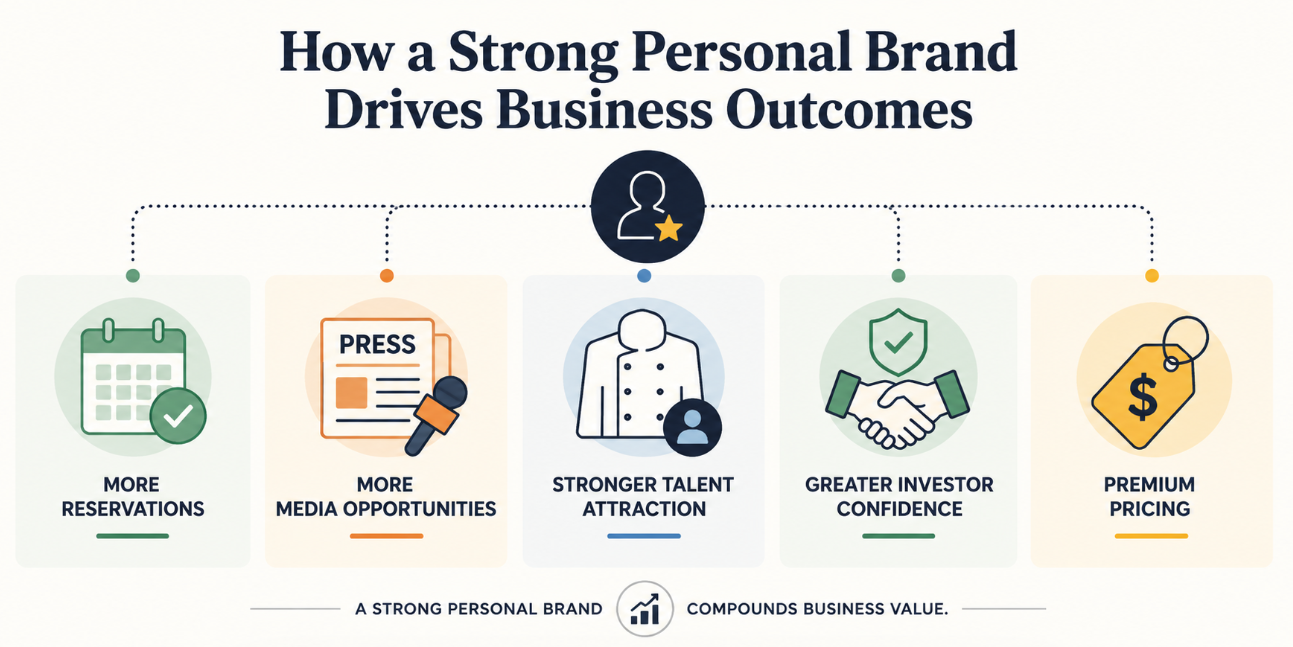
Consider what a recognized name actually unlocks. Reservations that fill on your name alone. Press that comes to you instead of the other way around. Landlords and investors who take your next concept seriously because the last one had a face they trusted. Hiring gets easier too, because cooks and managers want to be near people who are going somewhere.
As restaurateur Danny Meyer puts it: "Hospitality exists when you believe the other person is on your side."
That philosophy has become synonymous with Danny Meyer's personal brand. Rather than building his reputation around celebrity, he built it around a consistent approach to hospitality—one that guests, employees, and the industry came to recognize and trust. It's a reminder that the strongest personal brands aren't built on self-promotion, but on delivering the same values over and over again.
The Difference Between Your Personal Brand and Your Venue's Brand
These two brands live side by side, and confusing them can hold your business back. Your venue's brand belongs to the address—the space, the menu, the atmosphere, and the experience guests associate with that location. Your personal brand belongs to you. It travels with you, whether you open a second restaurant, launch a new concept, or pursue opportunities beyond your current business.
The strongest operators build both deliberately. They create a venue people want to return to while building a personal reputation that continues opening doors long after a single concept evolves.
That distinction becomes especially important as your career grows. A strong venue brand builds loyalty to a place, while a strong personal brand builds trust in you. That trust can make it easier to attract investors, earn media opportunities, form partnerships, and gain support for future ventures—even before a new concept opens its doors.
Will Guidara is a great example. While Eleven Madison Park became one of the world's most celebrated restaurants, Guidara's personal brand grew far beyond the dining room through his philosophy of Unreasonable Hospitality. Today, that reputation extends to his bestselling book, keynote speaking, and advisory work—demonstrating how a personal brand can outlast and expand beyond any single venue.
The Core Pillars of a Strong Personal Brand
There are countless frameworks for building a personal brand, but the strongest hospitality professionals tend to share three fundamentals: clarity, consistency, and visibility.
Clarity: Know what you want to be known for
You can't be known for everything. The strongest personal brands are associated with one or two defining ideas—whether that's live-fire cooking, exceptional hospitality, or sustainable sourcing. A clear personal brand statement helps keep that focus. If it could describe almost anyone in your city, it isn't specific enough.
Consistency: Deliver the same experience everywhere
Your Instagram, your dining room, your staff meetings, and your media interviews should all reflect the same values and personality. Every interaction reinforces—or weakens—the reputation you're building.
Visibility: Show up where the right people are
A strong personal brand only creates opportunities if people can see it. Focus on the channels where your guests, industry peers, journalists, and future employees already spend their time. Consistent visibility matters far more than trying to be everywhere.
Master these three pillars, and every interview, service, post, and guest interaction becomes another opportunity to strengthen your brand.
How to Build a Personal Brand: A Step-by-Step Strategy
Building a personal brand doesn't require a marketing team or a big budget. It starts with making intentional decisions about how you want people to know and remember you.
Define your positioning and personal brand statement
Start with a blank page. Write down what you want to be known for, who you want to reach, and what makes your approach different. Then turn those ideas into a short personal brand statement.
One good test: if your statement could describe another chef or restaurateur in your city, keep refining it until it feels unmistakably yours.
Choose your channels (and why social media matters in hospitality)
You don't need to be active everywhere. Focus on the platforms where your audience already spends time.
For most hospitality professionals, Instagram is still the strongest visual portfolio, while TikTok is ideal for reaching new audiences through behind-the-scenes content.
|
Platform |
Best content |
Posting rhythm |
Primary goal |
|
|
Reels + Carousels |
3–4x/week |
Build awareness & trust |
|
TikTok |
Behind-the-scenes videos |
2–3x/week |
Reach new audiences |
|
|
Leadership insights |
1–2x/week |
Build authority & attract opportunities |
|
|
Stories & updates |
1–2x/month |
Stay connected with loyal followers |
People don't expect perfection. They want to see the work behind the experience—the prep before service, the sourcing trips, the team, and the moments guests never see.
Build a content rhythm you can actually sustain
Consistency beats intensity. Posting twice a week for a year will do more for your reputation than posting every day for a month and disappearing. Choose a rhythm you can realistically maintain. At Bespire, we've learned that recognition doesn't come from creating more content—it comes from communicating the same message consistently over time.
Personal Branding Examples From the Hospitality World
The best personal branding examples in hospitality aren't built around popularity—they're built around a clear point of view. The most recognizable chefs and restaurateurs have become synonymous with a single idea, and they've reinforced it consistently through their work, their leadership, and the stories they share.
None of them got there through a single viral moment. They spent years showing up with the same message until people instinctively associated their name with it.
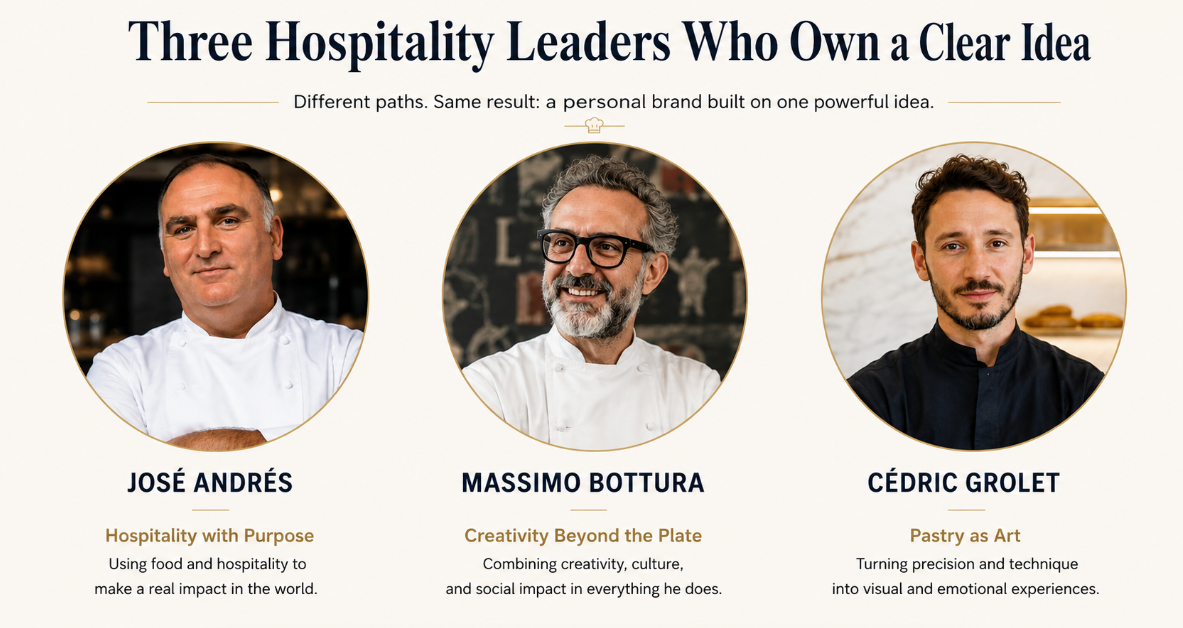
While their careers look very different, they all followed the same principle: they built a reputation around one clear idea and reinforced it over time. That's what makes a personal brand memorable. People don't remember everything you do—they remember what you consistently stand for.
Common Personal Branding Mistakes (and How to Avoid Them)
Even experienced hospitality professionals can fall into habits that weaken their personal brand. Here are some of the most common mistakes—and how to avoid them.
-
Trying to appeal to everyone. A personal brand that's meant for everyone usually stands out to no one. The strongest brands are built around a clear point of view, even if it doesn't resonate with every audience.
-
Being inconsistent or overly polished. Your online presence should reflect the same person guests, employees, and partners meet in real life. At the same time, don't feel pressured to appear perfect. Sharing the realities behind service, lessons learned, and the work behind the scenes often builds more trust than a carefully curated highlight reel.
-
Chasing trends instead of building trust. Viral moments can boost visibility, but they rarely create lasting credibility. Focus on consistently sharing your expertise, values, and perspective rather than trying to follow every trend.
-
Treating your personal brand as a vanity project. Likes and followers aren't the goal. A strong personal brand should create real business value—whether that's attracting guests, talented employees, media opportunities, or future investors.
Avoid these mistakes, and you'll already be ahead of many operators competing for the same guests, talent, and opportunities.
Personal Branding Tips You Can Act on This Week
You don't need a complete rebrand to strengthen your personal brand. Small actions, repeated consistently, often make the biggest difference.
-
Ask three regulars one simple question: "How would you describe me to someone who's never been here?" Their answer will tell you whether your reputation matches the one you're trying to build.
-
Share one behind-the-scenes moment. Skip the polished promotional post and show part of the process instead—prep before service, sourcing ingredients, or your team in action. Hospitality is built on people, and people connect with authenticity.
-
Google yourself. Look at what guests, journalists, or potential employees see first. Are your profiles consistent? Is the information current? Does it reflect how you want to be perceived?
-
Spend 15 minutes engaging with your community. Reply to comments, congratulate another chef, or join an industry conversation. Personal brands grow through relationships, not broadcasts.
-
Save one story worth telling. Every service has moments worth sharing—a guest interaction, a lesson learned, or a challenge your team solved. Start collecting them. Great personal brands are built on stories, not self-promotion.
Small actions may feel insignificant today, but repeated over months and years, they're what people eventually recognize as your reputation.
Frequently Asked Questions
What are the 7 pillars of personal branding?
Frameworks vary, but the seven pillars are commonly described as purpose, positioning, personality, perception, visibility, consistency, and value. For most hospitality professionals, though, you don't need to master all seven from day one. Start with the three pillars covered in this guide, clarity, consistency, and visibility, and build from there.
What are the 5 A's of personal branding?
The 5 A's are commonly defined as Authenticity, Authority, Approachability, Availability, and Aspiration. Together, they describe the qualities that make a personal brand trustworthy and memorable. In hospitality, that often means being genuine with guests, demonstrating expertise, staying accessible, and giving people a reason to keep following your journey.
What is the 3-7-27 rule?
The 3-7-27 rule is a framework that explains how familiarity and trust develop over time. It suggests that people need around 3 exposures to notice your brand, 7 interactions to begin remembering you and associating you with a specific expertise, and 27 touchpoints before they see you as a trusted, go-to choice.
While the exact numbers aren't universal, the takeaway is clear: personal brands are built through consistent visibility and repeated positive interactions—not a single post or viral moment.
Why is personal branding important?
Because in hospitality, guests often connect with the people behind the experience before they connect with the business itself. A strong personal brand builds trust, attracts talent, earns media attention, and creates opportunities that extend beyond a single restaurant or concept.
Do I need a marketing agency to build a personal brand?
No. You can start on your own by defining your positioning, sharing your expertise consistently, and staying visible over time. As your brand grows, working with a hospitality-focused partner like Bespire can help you build a more consistent strategy while you stay focused on running your business.